

Nanoparticles are by definition tiny particles that measure less than 100 nanometers in size. They are increasingly used in modern technology, medicine, cosmetics, and even food products.
As their presence grows in consumer goods, public concern has understandably also grown—often driven by fears of toxicity and environmental harm.
However, the reality is more nuanced. Understanding nanoparticle safety is essential for recognizing toxin-free nano solutions that can improve health, sustainability, and innovation.

What Are Nanoparticles?
Nanoparticles are commonly defined as materials engineered or occurring naturally at the nanoscale (1 to 100 nanometers). Due to their incredibly small size, they can exhibit unique physical, chemical, and biological properties. These features make them powerful tools in:
Allopathic care: targeted drug delivery, imaging agents
Cosmetics: improved absorption in lotions
Electronics: enhanced conductivity and energy storage
Food Packaging: antimicrobial surfaces and preservation
Their ability to interact with biological systems at the cellular level opens new doors for medical and technological advancements.

Why Nanoparticle Safety Matters
Despite their benefits, the rapid integration of nanoparticles into commercial products raises valid safety concerns. These include:
Environmental accumulation
Potential toxicity to humans and animals
Unknown long-term effects
Understanding nanoparticle safety means asking: Are these particles stable? Do they enter cells and cause damage? Can they be excreted safely?
Importantly, not all nanoparticles behave the same. Safety depends on the particle's size, shape, chemical composition, and how it interacts with living tissue.
Debunking Myths
The term "nanoparticle" often gets unfairly associated with risk. In reality, many nanoparticles, at least somewhat altered by man, are safe and beneficial when made and used correctly.
Nano-silver: Used in wound dressings for its antimicrobial properties.
Nano-liposomes: Microscopic carriers for targeted drug delivery, improving the effectiveness and reducing side effects of medications.
Nanosized-zeolite: Used in various detox products, including MasterPeace, to safely chelate positively charged toxins then excrete them out of the body.
There are also nano sized materials that have not been manipulated by man whatsoever. The below examples have proven to be among the healthiest stuff on earth/in nature.…in the nano range and smaller!
-Shilajit and Fulvic Minerals: Ancient plant matter naturally digested into a nano particle range over many centuries.
- Natural Mineral Plasma: Nano colloid liquids such as Sea Plasma and Marine Plasma. With the right dilution they can act as a blood replacement in blood transfusions.
Context and responsible usage are critical. Just like not all chemicals are harmful, not all nanoparticles pose a threat.
Toxin-Free Nano Solutions: A New Frontier
A growing body of research is dedicated to developing toxin-free nano solutions that are both effective and environmentally conscious. Key advancements include:
Biodegradable nanoparticles: Made from natural polymers like chitosan or alginate.
Green synthesis methods: Using plant extracts or microbes to create eco-friendly nanoparticles.
Non-toxic coatings: That prevent unwanted interaction with human tissue.
These innovations allow us to harness the power of nanotechnology while minimizing risks.
Making Informed Choices
You don't have to be a scientist to make smart decisions about nanoparticle-containing products. The idea is to use emerging advancements to your advantage while realizing that almost every technology will get hijacked and used for nefarious reasons. You need to discern the difference.
Seek brands that highlight safety: Certifications, third-party testing, or "toxin-free" claims are a good sign.
Do your research: Use reputable sources to understand what types of nanoparticles are in your cosmetics, supplements, or packaging. For instance, it is now understood that nano zinc oxide in sunscreens is harmful. Look for "non-nano zinc oxide" if choosing to use sunscreen.
Not all nanoparticles are bad. Many are carefully engineered to help not harm, like MasterPeace. Rooted in responsible science, it, as well as other toxin-free nano solutions, are a vital part of our path toward a healthier future.
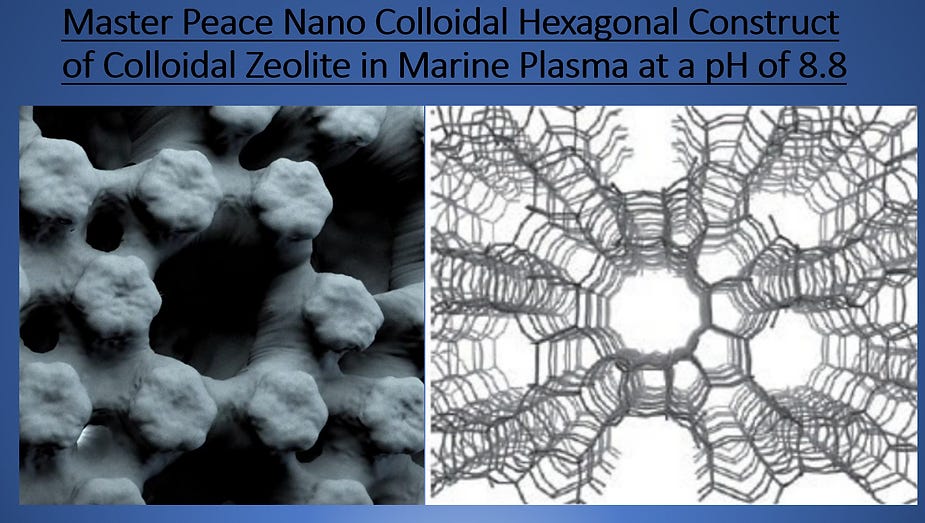
Fun fact: MasterPeace not only contains nanometer sized (one billionth of a meter) zeolites but also picometer sized. These are even smaller than nano. Our formula not only has the broadest range of zeolites but our process is also proven to not damage the zeolite cages that make zeolites effective. Our electron microscope images of masterpeace prove this fact and show the beauty of nature with it’s hexagonal symmetry.
Find our published papers, social media, weekly community call schedule, website, ++ more all on our Linktree
To your Health,
The Human Consciousness Support Team

MasterPeace: Make Pico-Love, Not Nano-War!
Very interesting data about nano particles.